Weight Loss • Lipase Inhibitor • Clinically Proven

Orlistat Fat‑Blocking Action — 25–30% Reduction in Dietary Fat Absorption

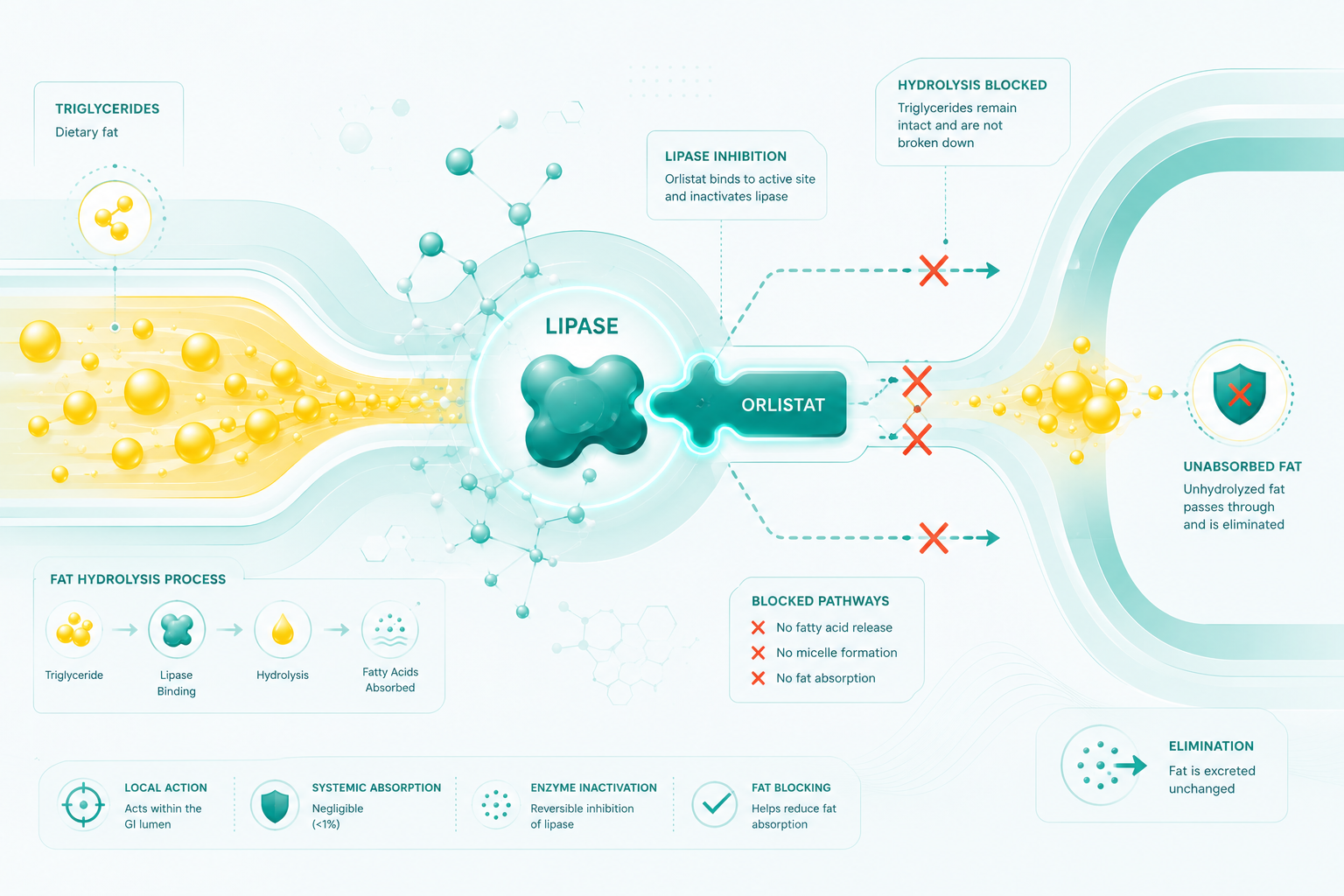
Orlistat reduces dietary fat absorption by 25–30% through targeted lipase inhibition, preventing triglyceride breakdown and keeping fats within the GI tract rather than entering circulation. This GI‑local mechanism (Mechanism, Pharmacokinetics) makes results strongly dependent on meal fat content: higher‑fat meals trigger stronger blocking, while low‑fat meals produce minimal effect. The difference between 60mg and 120mg dosing directly influences the percentage of fat reduction and the likelihood of GI reactions, including oily stools and urgency, which stem from unabsorbed fats (GI Effects). This clinically proven fat‑blocking profile supports steady weight reduction when combined with a structured, calorie‑controlled diet.

Core Fat‑Blocking Effect (25–30% Reduction)

Orlistat Fat‑Blocking Action

Orlistat delivers a clinically validated reduction of dietary fat absorption by approximately 25–30%, achieved through targeted inhibition of gastrointestinal lipases. By blocking these enzymes, the medication prevents triglycerides from being hydrolyzed into absorbable free fatty acids, keeping a significant portion of consumed fat within the GI lumen rather than entering systemic circulation. This localized mechanism—outlined in Mechanism and Pharmacokinetics—ensures that Orlistat acts exclusively in the digestive tract, avoiding systemic exposure and maintaining a favorable safety profile.

The magnitude of fat blocking is directly dependent on the fat content of each meal. Low‑fat meals produce minimal pharmacologic effect, while moderate‑fat meals typically yield around a 25% reduction in absorption. High‑fat meals can push the blocking capacity toward the upper 30% range, reinforcing the importance of dietary composition for optimal outcomes. This dose‑independent, GI‑local action supports structured weight‑management programs by reducing caloric intake in a predictable, meal‑dependent manner.

Diet Fat Level Expected Fat Blocking
Low-fat Minimal effect
Moderate-fat ~25% reduction
High-fat Up to 30% reduction

Lipase Inhibition → Fat Blocking

Orlistat’s fat‑blocking action begins with targeted inhibition of gastric and pancreatic lipases— the enzymes responsible for initiating triglyceride hydrolysis in the upper gastrointestinal tract. By binding to active sites of these lipases, Orlistat prevents them from breaking down dietary triglycerides into absorbable free fatty acids and monoglycerides. This pharmacologic interruption, detailed in Mechanism, effectively halts the conversion process required for fat absorption, leaving a substantial portion of consumed fat intact and unabsorbed.

When triglyceride hydrolysis is blocked, fewer free fatty acids are released, resulting in a measurable reduction in caloric uptake. The unabsorbed fats remain within the GI lumen and are excreted naturally, forming the foundation of Orlistat’s 25–30% fat‑blocking capability. This mechanism is non‑systemic, predictable, and meal‑dependent, making lipase inhibition the central driver of Orlistat’s clinical efficacy. The stepwise nature of this process explains both the reduction in caloric intake and the GI‑related effects that may occur when large amounts of unabsorbed fat pass through the digestive tract.

Step Effect
Lipase inhibition Enzyme inactivation
Triglyceride hydrolysis block Reduced fatty acid release
Fat absorption reduction Lower caloric intake

GI‑Local Fat Blocking (No Systemic Action)

Orlistat operates exclusively within the gastrointestinal tract, without entering systemic circulation—a key differentiator from centrally acting or hormone‑modulating weight‑loss medications. According to its Pharmacokinetics, Orlistat’s molecular structure prevents meaningful absorption, ensuring that its activity remains confined to the lumen of the stomach and small intestine. This GI‑locality is the reason Orlistat maintains a favorable systemic safety profile, avoiding cardiovascular, neurological, or endocrine effects associated with systemically absorbed agents.

Because the drug does not circulate through the bloodstream, systemic adverse reactions are minimal. Instead, the primary side effects are GI‑related and stem directly from unabsorbed fats passing through the digestive tract—an effect described in Side Effects. This localized action makes Orlistat suitable for adults seeking a non‑stimulant, non‑systemic approach to reducing caloric intake, with predictable outcomes tied to dietary composition rather than systemic pharmacologic modulation.

Diet‑Fat Dependency (Why Fat Matters)

Orlistat’s effectiveness is tightly linked to the amount of dietary fat present in each meal. Because the medication works by blocking the enzymatic breakdown of triglycerides, it requires dietary fat to exert its pharmacologic effect. When a meal contains little or no fat, lipase inhibition produces minimal benefit; conversely, meals with moderate or higher fat content allow Orlistat to block a larger portion of triglyceride hydrolysis. This dependency is explained in Food Interaction, where the relationship between meal composition and fat‑blocking intensity is outlined.

Higher‑fat meals generate stronger fat‑blocking outcomes, often approaching the upper range of Orlistat’s 25–30% absorption reduction. However, this also increases the likelihood of GI effects due to greater quantities of unabsorbed fat. Low‑fat diets, while beneficial for overall health, reduce the pharmacologic impact of Orlistat because there is simply less fat available for lipase inhibition. As detailed in Dosing, optimal results occur when Orlistat is paired with a balanced, calorie‑controlled diet that includes moderate amounts of dietary fat, allowing the medication to perform consistently while minimizing GI discomfort.

Fat Blocking Differences: 60mg vs 120mg

The fat‑blocking capacity of Orlistat varies significantly between the 60mg and 120mg strengths. The 60mg dose provides a moderate reduction in dietary fat absorption, suitable for OTC use and designed to deliver clinically meaningful results with a lower likelihood of GI reactions. In contrast, the 120mg prescription dose offers the maximum achievable fat‑blocking effect, approaching the upper 25–30% reduction range described in clinical studies.

Because the 120mg dose inhibits a larger proportion of gastric and pancreatic lipases, it leads to more unabsorbed fat remaining in the GI tract. This difference explains why GI reactions—such as oily stools, urgency, and increased flatulence—occur more frequently at higher doses. The comparison outlined in Brand Comparison highlights that both strengths share the same mechanism, but differ in intensity, tolerability, and suitability for OTC vs prescription use.

Fat Blocking Differences: Xenical vs Alli

Xenical and Alli share the exact same fat‑blocking mechanism: inhibition of gastrointestinal lipases, preventing triglyceride hydrolysis and reducing dietary fat absorption. The only meaningful difference between the two products is dosage. Alli contains 60mg of Orlistat and is available OTC, while Xenical provides the full 120mg prescription strength.

Because Alli delivers half the dose, its fat‑blocking effect is proportionally lower, making it suitable for individuals seeking a milder, more gradual reduction in caloric intake. Xenical, at 120mg, achieves the maximum fat‑blocking potential and is typically used under clinical supervision. The comparison detailed in Alli vs Xenical shows that both products operate identically at the mechanistic level, but differ in potency, GI tolerability, and regulatory classification (OTC vs Rx).

Fat Blocking → GI Side Effects

Orlistat’s GI side effects arise directly from its fat‑blocking mechanism. When lipase inhibition prevents triglycerides from being hydrolyzed, unabsorbed fats remain in the GI tract and move through the intestines unchanged. This process explains the characteristic oily stools, urgency, and flatulence described in GI Effects and Side Effects. These reactions are not signs of systemic toxicity—they are simply the physiological result of fat passing through the digestive system without being absorbed.

The intensity of GI effects is strongly dependent on dietary fat content. High‑fat meals produce more unabsorbed fat, increasing the likelihood of noticeable GI reactions. Conversely, moderate‑fat meals allow Orlistat to work effectively while keeping side effects manageable. As outlined in Food Interaction, adjusting meal composition—reducing fried foods, choosing lean proteins, and distributing fat intake evenly across meals—helps minimize discomfort while maintaining the medication’s fat‑blocking benefits.

Fat Blocking vs Other Weight‑Loss Agents

Orlistat stands apart from other weight‑loss medications because it is the only agent that reduces caloric intake by blocking dietary fat absorption. In contrast, GLP‑1 agonists such as semaglutide regulate appetite and slow gastric emptying through systemic hormonal pathways (vs Semaglutide). Phentermine works through CNS stimulation, increasing alertness and suppressing appetite via noradrenergic activity (vs Phentermine).

Unlike these systemic agents, Orlistat acts exclusively in the GI tract, without affecting the brain, cardiovascular system, or endocrine pathways. This makes its mechanism unique: instead of altering hunger signals or metabolic rate, it directly prevents a portion of consumed fat from being absorbed. As a result, Orlistat offers a non‑stimulant, non‑systemic alternative for individuals seeking a mechanical, diet‑dependent method of reducing caloric intake.

Orlistat (Xenical) FAQ

How much dietary fat does orlistat block?

Orlistat blocks roughly 25–30% of dietary fat by inhibiting gastrointestinal lipases. This prevents triglycerides from breaking down into absorbable fatty acids, reducing total caloric intake. The exact percentage depends on meal fat content and dose strength, with higher‑fat meals producing stronger effects.

Does orlistat work without fat in meals?

Orlistat requires dietary fat to activate its mechanism. If a meal contains little or no fat, lipase inhibition produces minimal benefit because there are no triglycerides available for blocking. Effectiveness increases with moderate‑fat meals that provide sufficient substrate for the drug to act on.

Why does fat blocking cause GI side effects?

GI effects occur because unabsorbed fat remains in the digestive tract and moves through the intestines unchanged. This leads to oily stools, urgency, and flatulence. These reactions are not harmful—they simply reflect the presence of fat that was not absorbed due to lipase inhibition.

Is fat blocking stronger with Xenical than Alli?

Yes. Xenical contains 120mg of orlistat, delivering the maximum fat‑blocking effect. Alli provides 60mg, resulting in a milder reduction in fat absorption. Both work through the same mechanism, but the higher dose produces stronger results and a greater likelihood of GI reactions.

How does diet fat level affect results?

Orlistat’s effectiveness increases with meal fat content. Moderate‑fat meals typically yield around 25% reduction, while high‑fat meals can reach the upper 30% range. Low‑fat meals produce minimal effect because there is little fat available for lipase inhibition.

Does orlistat block all types of fats?

Orlistat blocks the absorption of dietary triglycerides regardless of whether they come from animal or plant sources. Its mechanism targets lipase enzymes, so any fat requiring enzymatic breakdown is affected. However, the degree of blocking still depends on total fat content per meal.

How quickly does fat blocking start?

Fat blocking begins within one to two hours after taking a dose, aligning with the start of digestion. Lipase inhibition peaks during active fat processing, ensuring that triglycerides consumed in the same meal are partially prevented from being absorbed.

How does fat blocking compare to GLP‑1 drugs?

Orlistat reduces caloric intake by blocking fat absorption in the GI tract. GLP‑1 drugs work systemically, regulating appetite, glucose pathways, and gastric emptying. Orlistat is the only weight‑loss medication that acts mechanically rather than hormonally or neurologically.
GI Physiology (NCBI Bookshelf) Lipase Inhibition Studies (PubMed) FDA Label (GI‑Local Action)