Weight Loss • Lipase Inhibitor • Clinically Proven

Orlistat Food Interaction — Fat‑Dependent Action, Meal‑Linked Dosing & GI‑Effect Dynamics

Orlistat’s interaction with food is the core determinant of its efficacy, as its GI‑localized lipase inhibition described in Mechanism activates only in the presence of dietary fat. This fat‑dependent pathway, detailed in Fat‑Blocking, means that meal composition directly shapes onset, strength of action, and overall tolerability. Orlistat must be taken with meals containing fat, following the principles outlined in Dosing, ensuring predictable activation and consistent results. Higher‑fat meals intensify both efficacy and GI‑effects explained in GI Effects, while low‑fat meals produce milder responses. Both the OTC 60mg and prescription 120mg formulations follow the same food‑dependent mechanism, though the 120mg dose shows stronger fat‑blocking and more pronounced reactions. Understanding food interaction is essential for optimizing adherence, safety, and long‑term outcomes.

Why Food Matters (Core Interaction)
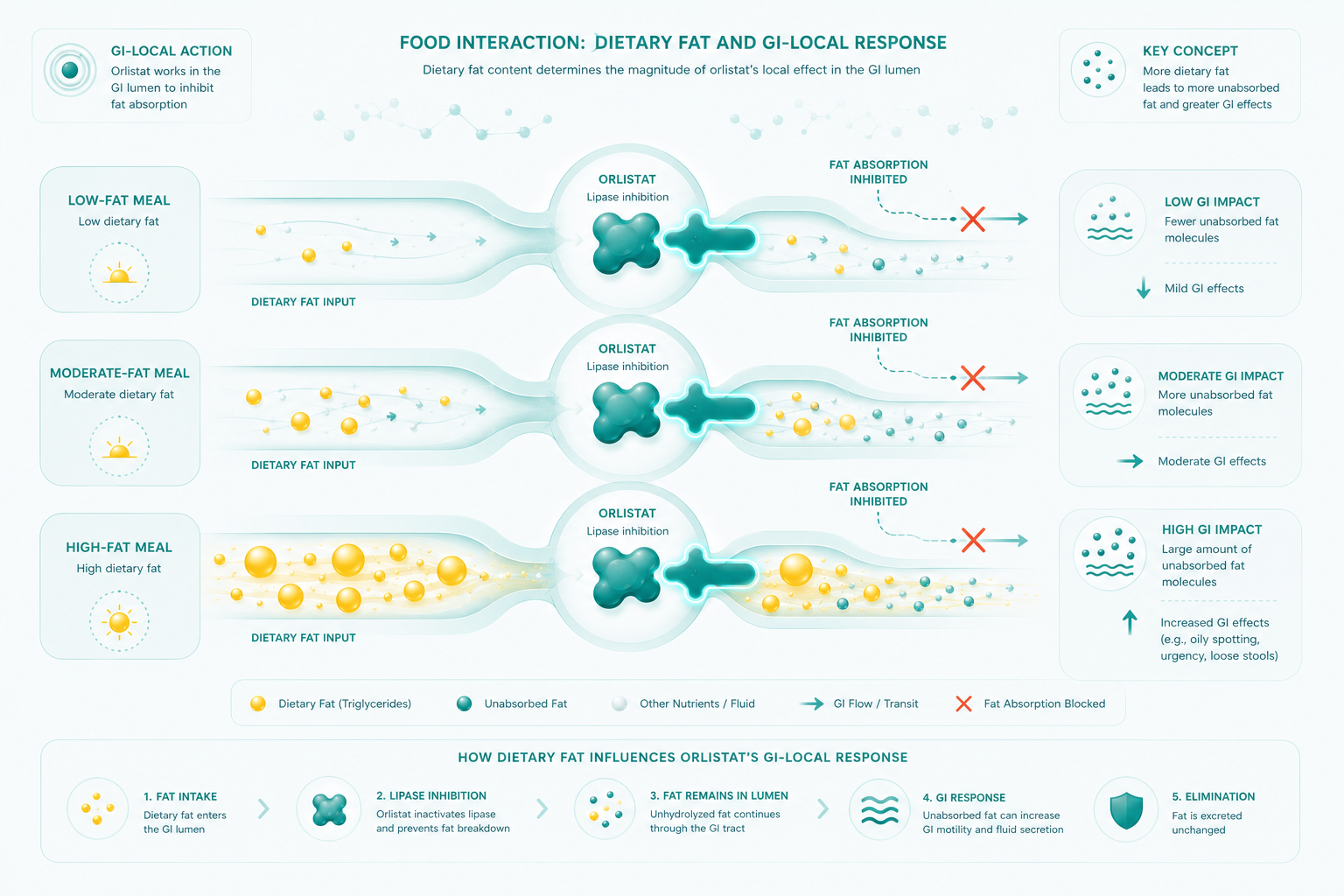
Orlistat Food Interactions

Orlistat’s effectiveness is fundamentally tied to the presence of dietary fats, making food composition a central determinant of real‑world outcomes. The medication works by inhibiting gastrointestinal lipase—an enzymatic process explained in Mechanism of Action— but this inhibition is only triggered when fats enter the digestive tract. Without food, and especially without fat, Orlistat cannot initiate its fat‑blocking activity, resulting in little to no therapeutic effect. This is why meal‑linked dosing is not just recommended but required for optimal efficacy.

The interaction between Orlistat and dietary fats also shapes the intensity of lipase inhibition. Meals containing moderate to higher fat levels provide the substrate needed for the drug to bind and block enzymatic activity, while very low‑fat meals produce a noticeably weaker response. Understanding this dependency helps users align dosing with meal patterns and maintain consistent therapeutic outcomes.

Fat Content → Efficacy

The amount of dietary fat in each meal directly determines how strongly Orlistat can perform its fat‑blocking function. Moderate‑fat meals consistently deliver the most balanced and predictable results: they provide enough substrate for gastrointestinal lipase inhibition without overwhelming the digestive tract. High‑fat meals, however, amplify the drug’s efficacy by supplying a larger volume of fat for Orlistat to block — but this also increases the likelihood of GI effects, including oily stools and urgency. Conversely, low‑fat meals produce a noticeably weaker therapeutic response, as insufficient fat reduces the degree of lipase inhibition.

Understanding this fat‑dependent efficacy helps users structure their diet to maintain consistent outcomes. Aligning meal composition with Orlistat’s mechanism ensures predictable fat reduction while minimizing discomfort. This balance is especially important for long‑term adherence and tolerability.

Meal Fat Level Efficacy Impact GI Effect Risk
Low-fat Reduced efficacy Low
Moderate-fat Optimal efficacy Moderate
High-fat Maximum efficacy High

Food Interaction → Onset & Duration

Orlistat’s onset of action depends entirely on the presence of dietary fats. Without fat entering the digestive tract, lipase inhibition does not begin, meaning the therapeutic onset simply does not occur. When fats are present, Orlistat activates within the expected window described in Onset & Duration, initiating gastrointestinal lipase blockade and reducing fat absorption.

Once activated, Orlistat continues working locally in the GI tract even after the meal is finished. This sustained activity aligns with its pharmacokinetic profile, allowing fat‑blocking effects to persist for several hours. As a result, meal composition not only determines whether onset occurs but also influences the strength and consistency of the drug’s extended action.

Food Interaction → GI Effects

The fat content of a meal is the primary driver of Orlistat‑related gastrointestinal reactions. High‑fat meals significantly increase the likelihood of oily stools, urgency, and other effects described in GI Effects, because more unabsorbed fat remains in the digestive tract. These reactions are not harmful but can be uncomfortable, especially when fat intake is inconsistent or excessive.

Meal‑linked dosing and balanced fat distribution throughout the day help minimize these reactions. Users who maintain moderate, evenly spaced fat intake typically experience fewer issues and better overall tolerability. This relationship between dietary patterns and side‑effect intensity is outlined further in Side Effects, reinforcing the importance of structured eating habits when using Orlistat.

Food Interaction: 60mg vs 120mg

Both Orlistat strengths — 60mg and 120mg — rely on the same meal‑linked dosing principle, meaning the drug must be taken with food containing fat to activate its lipase‑blocking mechanism. However, the higher 120mg dose responds more intensely to high‑fat meals, producing stronger fat‑blocking outcomes but also a greater likelihood of GI reactions. In contrast, the 60mg OTC formulation offers a milder response and is generally easier to tolerate, especially for users who prefer a gentler introduction to Orlistat therapy.

These differences are rooted in dose‑dependent sensitivity to dietary fat, which influences both efficacy and tolerability. A structured comparison of how each strength interacts with meal fat levels is outlined in Brand Comparison, helping users choose the formulation that aligns best with their dietary patterns and comfort level.

Dose Food Sensitivity GI Effect Risk
60mg Moderate Lower
120mg High Higher

Food Interaction: Xenical vs Alli

Although Xenical and Alli share the same mechanism of action — gastrointestinal lipase inhibition — their responses to dietary fat differ due to dosage. Xenical delivers the full 120mg prescription strength, resulting in stronger fat‑blocking activity and a more pronounced reaction to high‑fat meals. Alli, at 60mg OTC strength, produces a milder response, making it easier to tolerate and less sensitive to variations in meal fat content.

This dose‑driven difference explains why Xenical users may experience more noticeable GI reactions when consuming high‑fat meals, while Alli users typically encounter fewer issues. A detailed comparison of how both formulations interact with dietary fat is available in Alli vs Xenical, helping users understand which option aligns better with their eating habits and tolerability needs.

Food Interaction → Adherence & Efficacy

Consistent adherence to meal‑linked dosing is one of the strongest predictors of Orlistat’s real‑world effectiveness. Because the drug activates only when dietary fat is present, skipping doses or taking Orlistat without food leads to significantly weaker outcomes. Users who follow structured dosing patterns typically achieve better efficacy, more predictable fat‑blocking, and steadier weight‑loss progress.

At the same time, GI reactions — especially when fat intake is high or inconsistent — can reduce adherence. Effects described in GI Effects may discourage regular use if meal patterns are not adjusted. Balancing fat intake across meals and maintaining dosing discipline helps minimize discomfort and supports long‑term success, making food interaction a central factor in both adherence and therapeutic outcomes.

Food Interaction vs Other Weight‑Loss Agents

Orlistat is unique among weight‑loss medications because its efficacy depends entirely on dietary fat. Unlike agents such as semaglutide — discussed in Semaglutide Comparison — which regulate appetite systemically, Orlistat works locally in the digestive tract and requires fat intake to activate lipase inhibition. Similarly, phentermine, outlined in Phentermine Comparison, does not rely on food interaction and functions through central nervous system stimulation.

This distinction highlights Orlistat’s unique mechanism: its therapeutic effect rises and falls with meal fat content. As a result, dietary structure plays a far greater role in Orlistat‑based weight management than in treatments that operate independently of food intake.

Orlistat (Xenical) FAQ

Does orlistat work without fat in meals?

Orlistat requires dietary fat to activate its lipase‑blocking mechanism. When taken without food, or with meals containing almost no fat, the medication cannot bind to gastrointestinal lipases, resulting in minimal or no therapeutic effect.

How much fat should a meal contain for orlistat to work?

Most users achieve optimal results with meals containing moderate fat levels. This provides enough substrate for lipase inhibition without overwhelming the digestive tract, supporting predictable fat‑blocking and smoother tolerability.

Does high‑fat food increase GI side effects?

High‑fat meals significantly increase the likelihood of oily stools, urgency, and other GI reactions. These effects occur because more unabsorbed fat remains in the digestive tract, intensifying Orlistat’s local activity.

Is food interaction different for 60mg and 120mg?

The mechanism is identical, but the 120mg dose responds more strongly to high‑fat meals and carries a higher risk of GI effects. The 60mg dose is milder, making it easier to tolerate for users with variable fat intake.

Does orlistat work with low‑fat diets?

Orlistat still works with low‑fat diets, but its effect is weaker because less fat is available for lipase inhibition. Users may experience fewer GI reactions but also reduced overall fat‑blocking efficiency.

How does food affect onset of action?

Onset occurs only when dietary fat enters the digestive tract. Without fat, lipase inhibition does not begin. Meals containing moderate fat levels trigger predictable activation and sustained local action.

Does meal timing matter?

Orlistat should be taken during or immediately before meals containing fat. Delayed dosing reduces activation because lipase inhibition must coincide with fat entering the GI tract for effective blocking.

Is food interaction the same for Xenical and Alli?

Both rely on dietary fat to activate, but Xenical’s higher dose produces stronger responses to high‑fat meals. Alli is gentler and less sensitive to fat variations, making it easier to tolerate for many users.

Can food interaction affect adherence?

Yes. High‑fat meals can increase GI reactions, which may discourage consistent use. Structured fat intake and meal‑linked dosing improve tolerability and support long‑term adherence to therapy.

How does food interaction influence overall efficacy?

Meal fat content directly determines how much lipase inhibition occurs. Moderate‑fat meals deliver the strongest balance of efficacy and tolerability, while low‑fat meals reduce effectiveness and high‑fat meals increase GI risks.

FDA Label — Food Interaction GI Physiology — Fat Absorption (NCBI) Food Interaction Studies (PubMed)